Outdoor hardware startup · Oklahoma
Two engineering students had never written a grant. With three days to apply, they secured $75,000 in equipment.
With Quillify, Oklahoma Farm Bureau and a nonprofit partner, two Oklahoma State engineering students turned their business plan into a submitted USDA proposal on a tight deadline.
- Manufacturing equipment funded
- $75,000
- Grant application
- First
- Initial proposal draft
- Same day
- From submission to award notice
- About 45 days
Two students with something they wanted to build
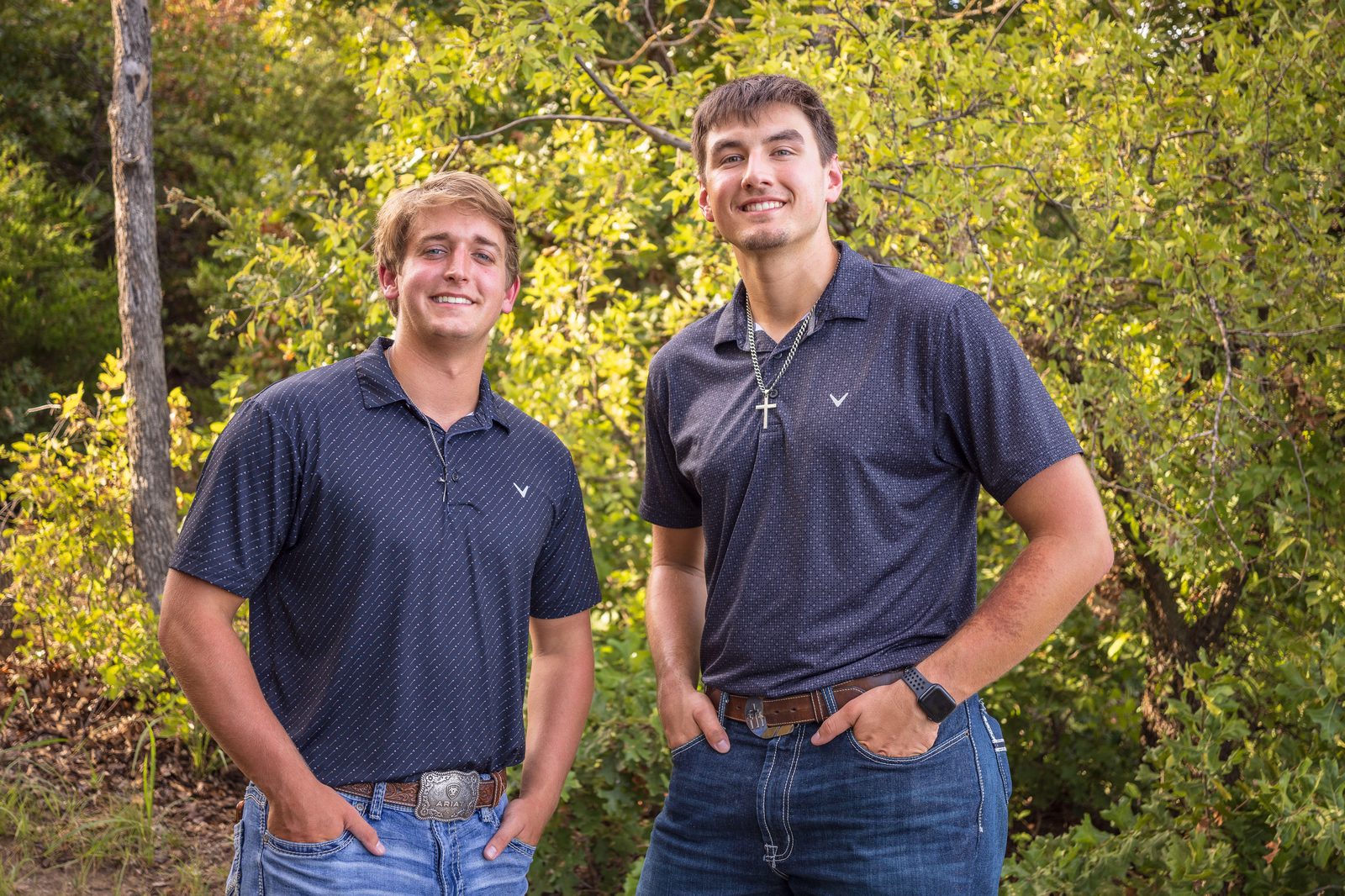
Reese Huhnke and Myles Lozano study different engineering disciplines at Oklahoma State University. They share an interest in hunting. Together, they founded TriPoint Innovations to develop Hunter Radar, a hardware and software device designed to help people stay connected outdoors where cell service is unavailable.
Reese studies chemical engineering. Myles studies mechanical engineering. Their product combines location sharing, an SOS button and an all-day battery.
When a grant opportunity surfaced through Oklahoma Farm Bureau’s rural accelerator, they had an idea and a few prototypes. Neither founder had applied for a grant before.
How the grant came together
The founders were members of Oklahoma Farm Bureau’s rural accelerator cohort. Farm Bureau runs its cohorts on Quillify and sponsors each member’s account. Its staff found the USDA program and pointed the founders to it.
The USDA Rural Business Development Grant program supports rural business development, including equipment projects like TriPoint’s. Businesses cannot apply directly. An eligible organization must apply. In TriPoint’s case, a nonprofit partner submitted the application and handles the USDA agreements and equipment payments.
The full requirements packet reached the founders three days before the deadline. Everyone told the founders the application could not be completed in time. Farm Bureau staff encouraged the founders to use Quillify to meet the deadline.
“This is actually our first grant ever. We had no idea coming in. When I saw the documents to apply for the grant, I was like, oh crap, this is going to be a lot of work, and I’m not sure we know what we’re doing enough to actually complete this.”
From business plan to proposal
Reese uploaded the application requirements, their business plan and supporting company information into Quillify.
Quillify generated a full proposal draft the same day. Reese then worked through revisions inside the platform, spending about five hours refining the proposal until both founders were satisfied.
“Quillify was great, because I put in absolutely everything, from the grant application to our business plan to everything I could think of, and it completed every step of the way. It was a lifesaver and helped us do something we’ve never done before.”
Having a draft gave them something concrete to review and improve as first-time applicants. Reese described the writing as formal, like a professional grant writer’s.
“Compared to the time it would take to actually write all that out, it was minuscule.”
The nonprofit partner submitted the application in June 2026. About 45 days later, in early August, the award notice arrived: $75,000 for manufacturing equipment.
What the equipment makes possible
The award funds an injection molder, 3D printing equipment and an electrical workstation. The nonprofit partner purchases the equipment and leases it to TriPoint Innovations.
For Reese and Myles, that helps address a practical challenge: how to move from prototypes toward manufacturing Hunter Radar in the United States.
“We don’t have to focus on how are we actually going to make these things, where are we going to do that, and that kind of thing.”
Their expectations for the company have grown, too. Reese said they originally thought it would be a two-person operation. They now plan to hire three to five people for manufacturing as the business develops.
The equipment support also allows them to move forward without giving up equity in their company.
What they would tell another startup
Myles encourages other founders to consider the support an experienced nonprofit partner can provide.
“Pairing with a nonprofit that’s applied to grants before and can handle all the finances is a great way for a startup to take that burden off of their hands and really focus on developing their company while still receiving that grant in the end.”
Farm Bureau identified the opportunity and provided access to Quillify. Reese and Myles supplied their business information and revised the proposal. The nonprofit partner submitted the application and administers the award.
With that support, the founders completed their first grant application under a tight deadline.
What comes next
At the time of the interview, equipment purchasing was beginning. The founders were working to prove out their first production units.
They also planned to pursue additional grants as they grew the business.
“We’re doing whatever we can to keep using grants as a way of funding so that we don’t have to give up any of our company.”
“I would absolutely use Quillify again.”
Read more, from the people involved
- TriPoint Innovations. The company’s own site: Hunter Radar, the team and progress updates, from Stillwater, Oklahoma.
- OKFB names 12 Oklahoma businesses to 2026 agriculture and rural development cohorts. Oklahoma Farm Bureau’s announcement, June 10, 2026, naming TriPoint Innovations in the Activate Oklahoma cohort.
- USDA Rural Business Development Grants, program fact sheet. USDA Rural Development’s own description of the program: who may apply, what it funds and the award range.
Questions readers ask
- How long did the application take?
- The founders received the full requirements packet three days before the deadline. Quillify generated the initial proposal draft the same day they uploaded their documents. They spent about five hours revising it before the nonprofit partner submitted the application.
- Did TriPoint receive $75,000 in cash?
- The award funds manufacturing equipment. A nonprofit partner received the award and purchases and leases the equipment to TriPoint Innovations.
- How soon did they hear back?
- The award notice arrived approximately 45 days after submission.
- Did the founders give up equity?
- No. The equipment was funded through the grant arrangement without the founders giving up equity.
The features in this story
Know an organization that should see this?
Send this story to a peer who runs a program like yours.
More case studies
$6,000 for intern hiring
EnCor Industries
Drone manufacturing, Tulsa, Oklahoma
$5M
Creative 3D Technologies
Additive manufacturing, Austin, Texas
$1.2M in grant-funded contracts
A US services company
Services, United States
$300,000
Grantvest
Software, Oklahoma
Have a project you want to move forward?
Create a free Quillify account to explore funding opportunities for your organization. Browsing and keyword search are free. No credit card required.