
What a rejection is actually telling you
Why was my grant proposal rejected and should I reapply?
Usually because more good proposals were submitted than there was money, which is not a statement about yours. Competitive federal programs routinely fund a small fraction of applications, and the difference between funded and unfunded is frequently a few points among proposals a reviewer considered strong. Ask for the reviewer comments, which many funders provide on request. Resubmitting is worth it when the comments identify fixable weaknesses; it is not when the feedback says the fit was wrong.
Last reviewed August 6, 2026.
The actual reasons, roughly in order
- Not enough money
- The most common by a distance. A program funding one in eight applications declines seven proposals, most of which were competent. Reading this as a verdict on your work is both painful and inaccurate.
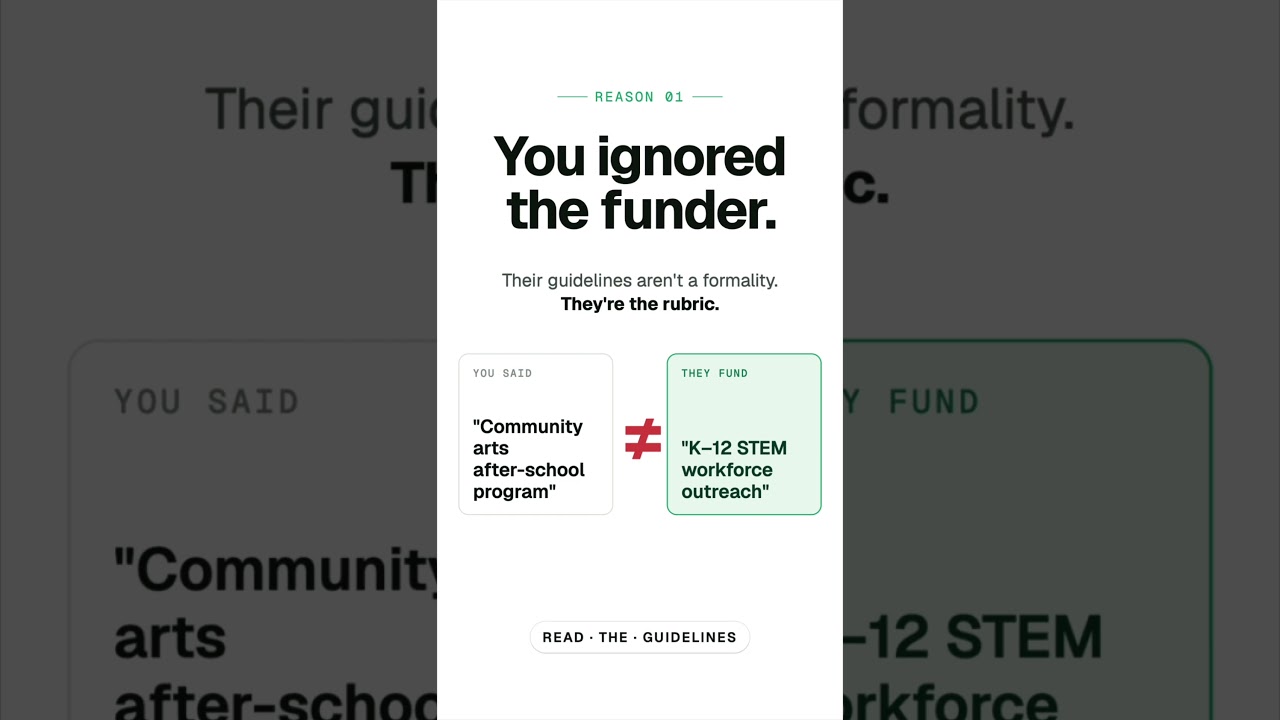
- Fit
- Technically eligible, not what they are trying to buy. Resubmitting the same proposal to the same funder will produce the same result.
- A compliance failure
- Screened out before evaluation for a missing attachment, a page limit, or a format requirement. Infuriating and entirely preventable, which is what checklists are for.
- Specific weaknesses the reviewers named
- Evaluation plan thin, budget unjustified, organizational capacity not evidenced. The most useful outcome available from a rejection, and only if you ask for the comments.
- Portfolio decisions you cannot see
- Geographic balance, an existing grantee in your area, a decision to fund three large projects instead of eight small ones. Invisible from outside and not a signal about your proposal at all.
Ask for the comments
Federal programs generally provide reviewer summaries, and many foundations will talk to you if you ask politely and briefly. It is the single highest-value thing you can do after a decline, and most applicants do not do it.
Ask as someone trying to improve, not as someone appealing. A short note saying you plan to strengthen the application and would value knowing where it fell short gets a substantive answer surprisingly often.
When to resubmit
When reviewers named fixable weaknesses, resubmit and address them explicitly. Some programs let you include a response to previous review, and where they do, it is worth a great deal.
When the feedback was about fit, do not. Find the funder whose stated intention matches what you actually do, which is what working backwards from funders is for.
And when you scored well and lost to a budget constraint, resubmit almost unchanged. That is a queue, not a rejection, and people leave the queue far too readily.
Who asks this most
The answer above is the same whoever you are. What Quillify does about it is not.
Related
- The mistakes that repeatWhat are the most common mistakes in grant proposals?
- How a reviewer actually reads your proposalHow do grant reviewers actually read proposals?
- The work that starts when the money arrivesWhat are my obligations after winning a grant?
All guides, or the glossary.
Stop researching and see what you are eligible for.
Browsing and keyword search are free, and there is no card required.